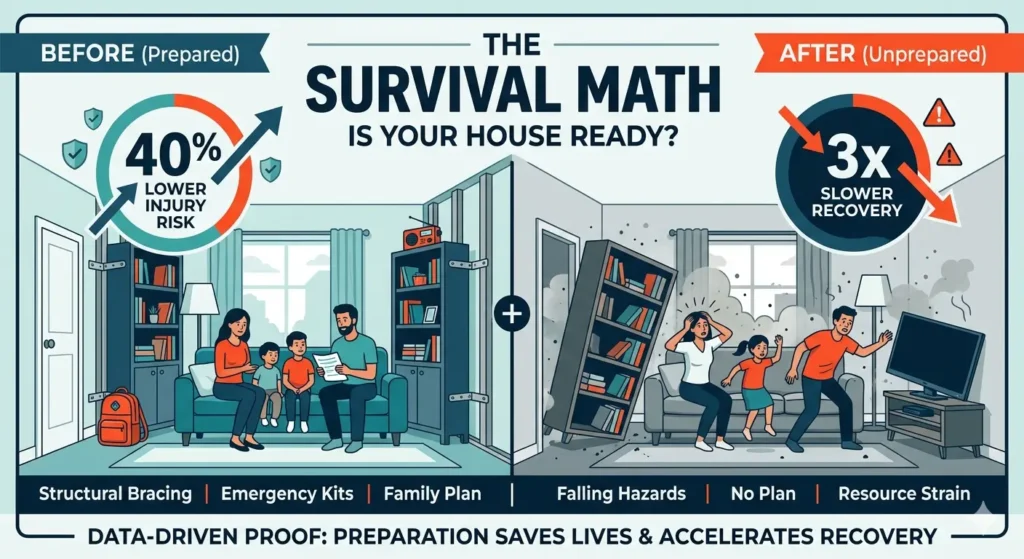
Recent data from 2024–2025 survival studies and FEMA reports highlight a stark “Resilience Gap” between households that prepare and those that do not. When the shaking stops, the math is simple: preparation doesn’t just save time; it saves lives.
- The 72-Hour Reality: In a major US seismic event, emergency services (911) are projected to be overwhelmed for a minimum of three days. Prepared households function as their own “First Responders,” reducing the burden on overstretched national resources.
- Physical Safety (The 40% Margin): According to 2025 safety audits, households that implemented basic non-structural mitigation—like anchoring tall furniture and strapping water heaters—saw a 40% lower rate of non-fatal injuries compared to unprepared homes.
- The Recovery Multiplier: Families with ready-to-go documentation and emergency funds recover 3x faster than those without. Financial readiness is often the difference between a temporary setback and a permanent relocation.
- Psychological Agency: New research in Disaster Mindset (2025) proves that “Action Kills Fear.” Individuals with a written plan and basic gear show significantly lower levels of Post-Traumatic Stress and panic, as their brains are primed for a “response” rather than a “freeze” state.
The Bottom Line: Being prepared is not a hobby; it is a calculated investment in your family’s survivability and long-term stability.